
6.9 Materials: Using and Reusing
backUnderstand /10
6.9.21 Composting
🍎 Imagine this: You’re eating an apple, and when you finish, you toss the core into the trash. That core ends up in a landfill 🗑️, where it rots and produces harmful gases 🌫️ that hurt the planet 🌍.
But what if you could turn that apple core into something amazing—like rich, healthy soil 🌱 that helps grow new plants 🌻?
That’s exactly what composting does! It’s like magic 🪄: You turn smelly trash into "black gold" 🌟 that makes gardens bloom, saves the environment, and gives food waste a second life ♻️. Plus, it’s super fun to watch nature do its work right in front of your eyes 👀!
💡 Ready to become a waste-saving wizard? Let’s learn how to compost!
| Composting is the process of turning organic waste, like food scraps and yard waste, into rich, healthy soil that helps plants grow.
It’s like giving your leftovers a second life. |
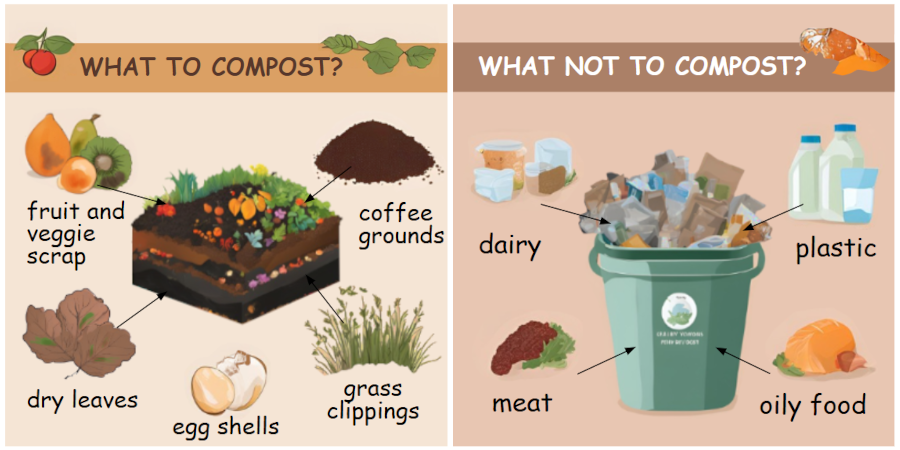
What Can You Compost?
- YES: Fruit and veggie scraps 🍎, coffee grounds ☕, eggshells 🥚, grass clippings 🌱, dry leaves 🍂.
- NO: Meat, dairy, oily foods 🍖🧀, and plastic packaging 🛍️.
Why Composting Matters?
Benefits:
- Reduces Waste: Composting keeps organic waste out of landfills, where it produces harmful methane gas 🌫️.
- Improves Soil: Compost adds nutrients to soil, helping plants grow better 🌻.
- Closes the Loop: Food waste becomes soil, which grows more food—a natural recycling system ♻️!
1 2